Similar Twin Heads, Different Building-lighting Systems
Compare WKEME's rechargeable twin-head fixture and DC 36 V central-supply light by their system requirements before choosing a building package.
In this guideLook beyond the lamp heads
Two adjustable lamp heads are easy to recognize. Put two building fixtures next to each other and their shared silhouette may suggest they are interchangeable. The system behind them can tell a different story.
WKEME lists both a WK8313 Twin-head Emergency Light and a WK8301 Central-supply Twin-head Emergency Light. Understanding that distinction is the most useful first step in comparing them.
Look beyond the lamp heads
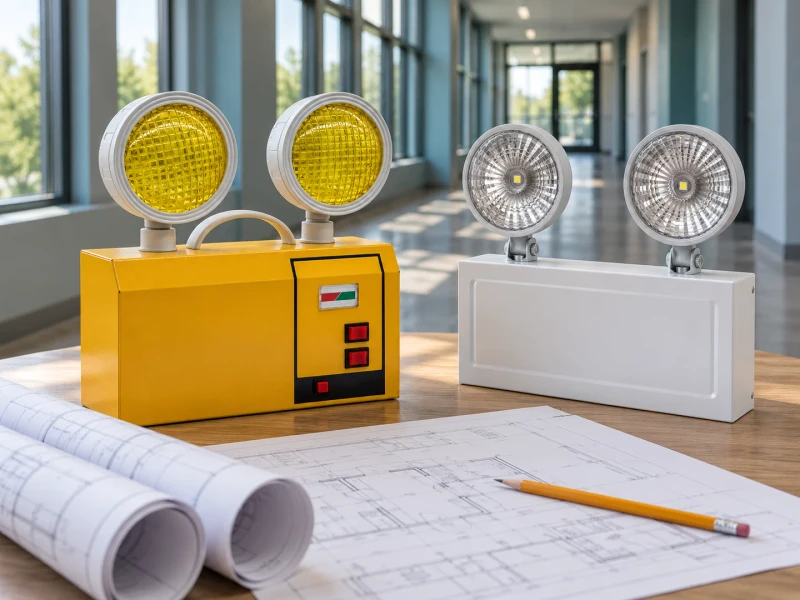
The rechargeable fixture includes an integrated handle and a visible test and indicator panel. Its battery configuration is part of the selected product specification.
The central-supply version uses a metal panel and is intended for a compatible centralized emergency-lighting system. Its DC 36 V description should remain visible in the product selection, rather than disappearing beneath a generic twin-head title.
Neither format should be selected on appearance alone. Have the relevant project professional confirm the intended system and the exact fixture requirements before ordering.
Put the system information beside the sample
For a project review, identify the model, supply arrangement, mounting requirements and documented performance separately. The sample lets the team inspect the enclosure and adjustable heads; the specification establishes whether the product fits the planned system.
Ask for documents that identify the actual proposed fixture. Similar styling does not transfer an approval, rating or test result from one product to another.
Coordinate signs as a separate selection
The WK8304 Emergency Exit Signs includes directional options, single- and double-sided formats and different mounting arrangements. Those signs need their own project references rather than being treated as a standard accessory to either light.
Keep the fixture schedule and sign schedule clearly identified. That makes it easier to connect each delivery item with the location and configuration approved for the project.
Use the catalog as the beginning of the brief
The value of showing both twin-head formats is that the distinction becomes visible early. The team can ask the right system questions before comparing the enclosure or price.
WKEME’s building-lighting collection provides a place to begin that review. Bring a defined system requirement and fixture schedule to the discussion, then compare the exact proposed products against that brief. A clear selection starts behind the lamp heads, with the system they are meant to serve.